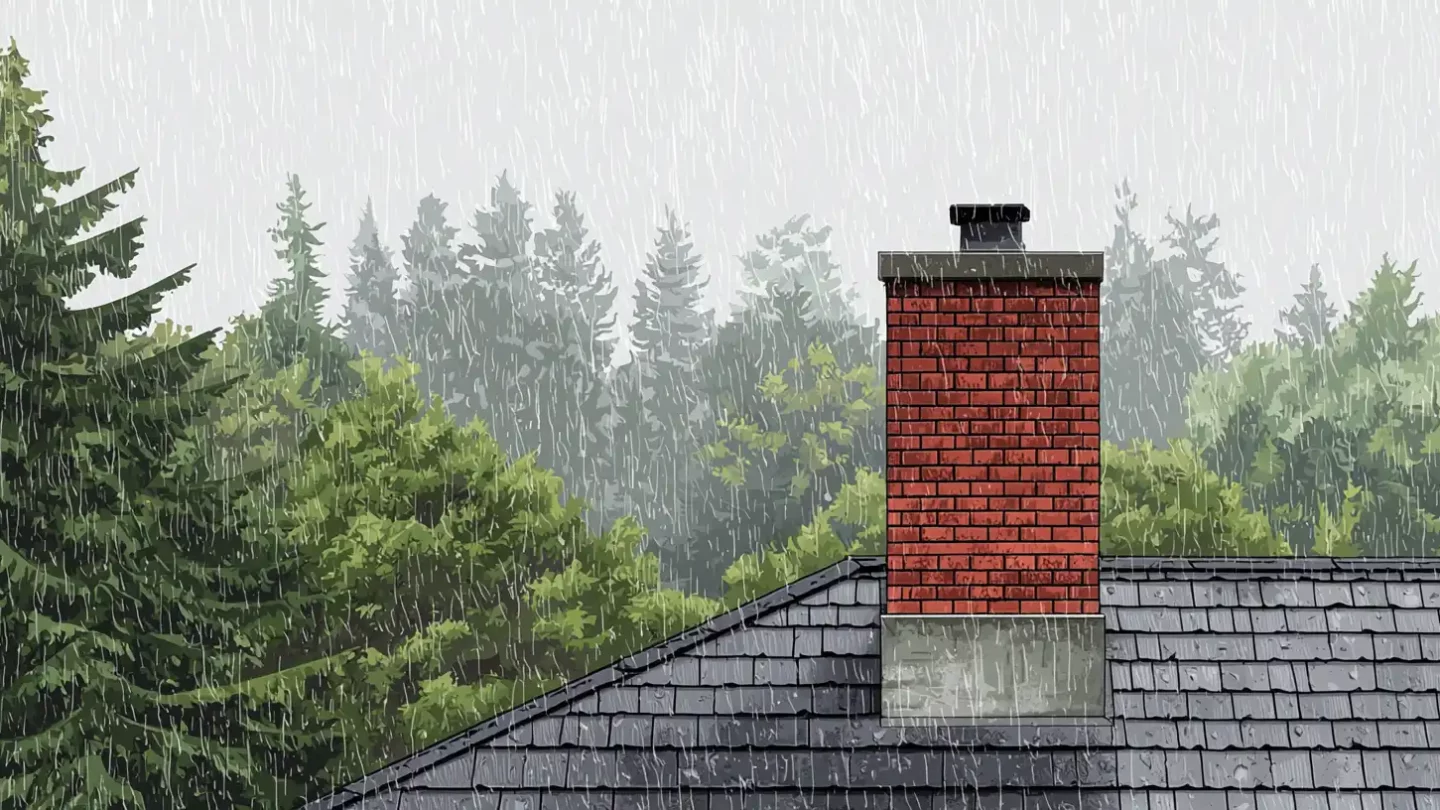
A lot of homeowners with unused chimneys are asking exactly the right question: does this thing still need attention if nobody’s lighting fires in it?
The short answer is yes, and understanding why comes down to one thing most people haven’t thought about. It’s not about the fireplace. It’s about what the chimney actually does for your house, whether the firebox is in use or not.
Your Chimney Is Part of Your Home’s Outer Shell
Whether you use it or not, your chimney is part of what builders call the building envelope, the physical barrier between the inside of your home and the outside environment. The walls, roof, windows, and yes, the chimney, all work together to keep the weather out and the conditioned air in.
The chimney doesn’t get a pass on that job just because there’s no fire burning below it. It’s still exposed to rain, wind, and temperature swings every single day. And because it’s masonry — brick and mortar — it absorbs moisture in a way that wood and metal simply don’t.
What Happens When Water Gets In
Here’s what many homeowners don’t think about: the damage from a compromised chimney often starts invisibly, deep inside the masonry, long before anything obvious appears.
When water saturates bricks and mortar, it works its way through the structure slowly. The masonry begins to deteriorate from the top down and the inside out. For a while, there’s nothing to see. The chimney looks fine from the street. No leaks inside the house. No visible crumbling.
Then the signs start to show up on the outside of the chimney:
- Staining and dark streaks down the brickwork
- Moss or biological growth on the surface
- Mortar joints that look sandy, recessed, or are starting to crumble away
- Cracks running through the bricks or along the mortar lines
- Spalling — where the face of the brick literally flakes off and falls to the ground
- A chimney that looks like it’s leaning, even slightly
These signs are easy to miss from ground level, especially if the chimney is at the back of the house or partially screened by trees. By the time they’re obvious, the process has usually been underway for years.
When It Becomes Impossible to Ignore
At some point, water stops staying in the masonry and starts finding its way into the house. That’s when homeowners call us.
The interior signs of a chimney water problem include:
- Pools of water collecting inside the fireplace or around the base of the hearth
- Dampness, water stains, or discolouration on walls and ceilings near the chimney
- A white powdery substance on the brick inside the fireplace — called efflorescence — which is mineral salt left behind when water evaporates through the masonry
- A persistent musty smell near the fireplace, even when it hasn’t been used
What catches people off guard is that these problems rarely appear overnight. Most of the time, water has been getting in for years — sometimes since the chimney was originally built. The leak wasn’t dramatic enough to notice until it crossed a threshold.
One customer put it this way: “For 34 years I sort of controlled a leaking chimney with masonry sealer. Finally I knew I had to get a permanent solution.”
That’s a long time to manage a problem that had a straightforward fix.
The Flashing Factor
There’s a second way water gets into a chimney, separate from the masonry itself. Where the chimney passes through the roof, a thin strip of metal called flashing seals the joint between the two surfaces. It’s the only thing standing between that gap and the inside of your home.
Flashing is easy to forget about because you can’t see it from the ground. But it takes a beating every year — thermal expansion, rain, and freeze-thaw cycles all work against the seal over time. When the flashing fails, water doesn’t trickle in. It pours in, often running down the inside of the chimney structure and appearing as a leak far from where the actual problem is.
When we see water damage near a chimney, it’s coming from one of two places: water saturated masonry, the flashing, or both at once.
Why This Matters Even More for Unused Chimneys
An active fireplace gives you regular reasons to look at and think about your chimney. An unused one doesn’t. It just sits there, season after season, taking on weather with no one paying attention.
The consequences of letting it go too long are real. A chimney that’s been deteriorating for years becomes a structural issue, not just a cosmetic one. A leaning chimney is a safety hazard for anyone nearby. Falling masonry debris from a deteriorated chimney can cause serious injury. And the water that’s been working its way through the brickwork for a decade has usually found its way into the framing of the house by the time it shows up on your ceiling.
Catching this early is almost always a repair job. Catching it late is often a rebuild.
What Are Your Options?
If you have an unused chimney and you want to deal with it properly, it will be crucial to address any water issues first. As we come take a look at your chimney we will diagnose the root of the problem, and present you with various options that will be tailored to your situation.
The Simple Version
You don’t need to use your chimney for it to matter. It’s part of your home’s outer shell, and it’s made of materials that absorb water and deteriorate when that water isn’t managed.
If your chimney hasn’t been looked at in a few years, or if you’ve noticed any of the signs above, it’s worth having someone take a proper look. Not because something is definitely wrong — but because if something is wrong, finding out sooner is almost always better and less expensive than finding out later.
As we like to say: your chimney might sometimes be seen as last. But it’s certainly not least.
Lindbjerg Chimney has been repairing and rebuilding brick chimneys across Metro Vancouver for over 30 years. If you have questions about your chimney — used or not — get in touch or call us at 604-614-7516.