Living in the Lower Mainland comes with incredible scenery, beautiful forests, and a whole lot of rain. As a homeowner here, you know how important it is to keep that water outside where it belongs. But what happens when the very structure designed to keep your home warm starts letting the cold, damp weather inside?
If you notice water stains near your fireplace, hear dripping sounds, or smell a musty odor, you might have a chimney leak. As a chimney repair specialist who has spent years helping local families protect their homes, I see these problems every single rainy season. Dealing with a leaky chimney feels overwhelming, especially when you are not sure how the system works.
You do not need to be a masonry expert to understand your chimney. This guide will walk you through exactly what causes these leaks, why they demand your attention, the importance of quick action, and how to protect yourself from bad contractors when you need a fix.
What Causes Chimney Leaks?
Your chimney stands tall above your roof, taking the brunt of wind, rain, and changing temperatures. Over time, this constant exposure wears down its defenses. Here are the most common reasons water finds its way inside.
Missing or Damaged Chimney Caps
Think of a chimney cap as an umbrella for your fireplace. It sits at the very top of the flue, the opening where the smoke escapes. If you do not have a cap, or if a storm blew yours away, rain falls right down the hole. In the Lower Mainland, a missing cap means gallons of water pouring straight into your home during a heavy storm.
Cracked Chimney Crowns
The chimney crown is the flat or slightly sloped concrete surface at the top of the brickwork. It acts like a roof for the actual chimney structure, directing water away from the bricks and down onto your house roof. Concrete shrinks and swells with temperature changes. Over time, small cracks form. Water seeps into these cracks, and when temperatures drop near freezing, the water expands. This pushes the cracks open even wider, eventually letting water soak straight into the chimney.
Worn Out Flashing
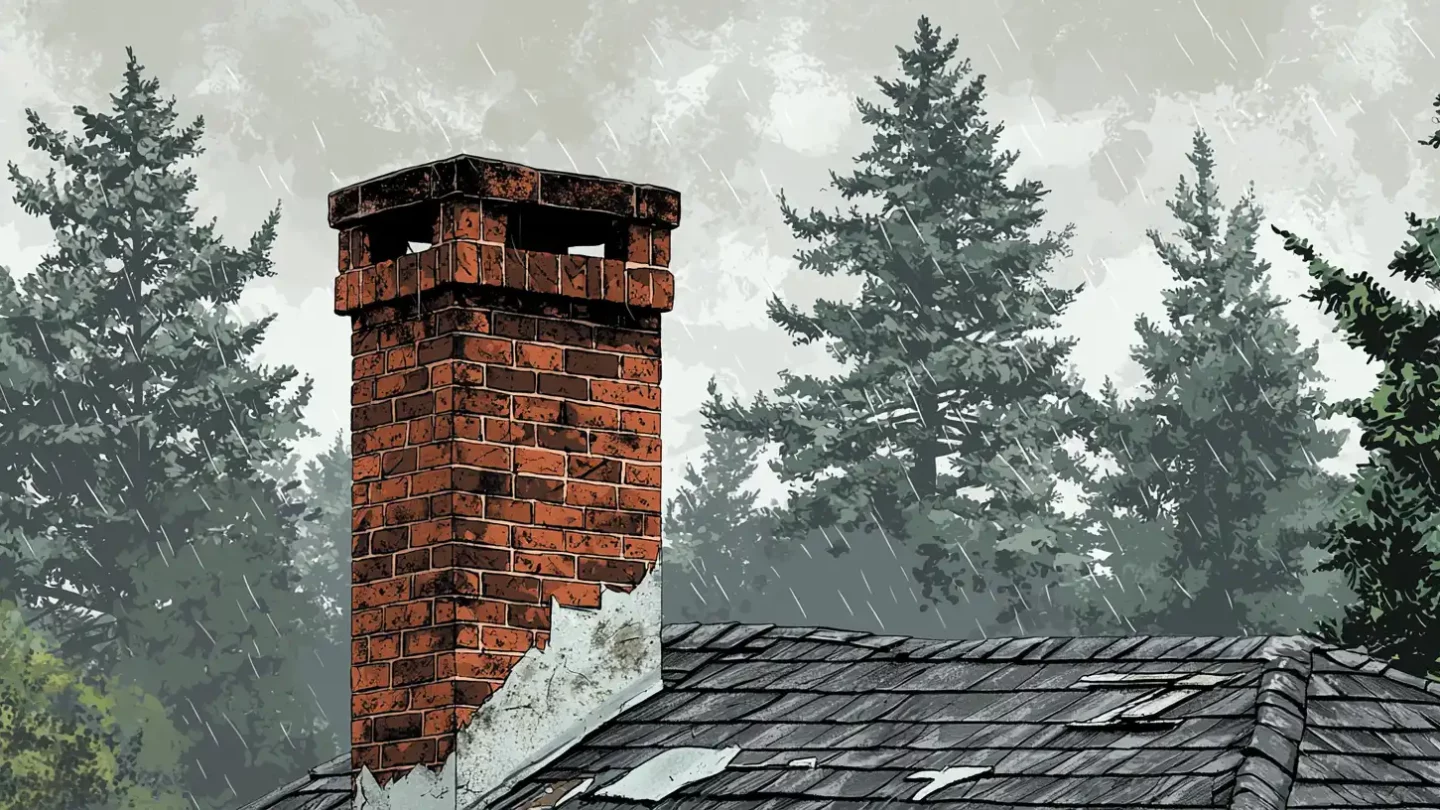
Flashing is the metal layer that seals the gap where your chimney meets your roof. Because your chimney and your roof are made of different materials, they shift and settle at different rates. The flashing acts as a flexible bridge between them. When the metal rusts, or the waterproof sealant around it peels away, you lose that tight seal. Flashing failures are the number one cause of chimney leaks in our area.
Deteriorating Bricks and Mortar
Bricks look solid, but they act like hard sponges. They naturally absorb a little bit of water. The mortar, the paste that holds the bricks together, does the same thing. Decades of heavy coastal rain take a heavy toll on these materials. The mortar can crumble and wash away, leaving gaps between the bricks. When this happens, water passes right through the walls of your chimney and drips into your attic or living room.
Why You Should Care About a Leaking Chimney
A few drips of water might not seem like an emergency, especially if they are contained inside the firebox where you burn wood. However, water acts like a slow-moving poison to a house. Ignoring the issue leads to massive headaches and serious health concerns.
Interior Water Damage
Water travels along the path of least resistance. A leak at the top of your chimney can easily travel down the outside of the brickwork and pool inside your attic. From there, it ruins your insulation and seeps into your ceiling. Before long, you will see ugly brown water stains spreading across the drywall near your fireplace. Eventually, that drywall will bubble, peel, and cave in.
The Threat of Mold and Mildew
Our coastal climate already provides a humid environment. When you add a persistent roof leak to the mix, you create the perfect breeding ground for mold. Mold grows rapidly in dark, damp spaces like attics and the cavities behind your walls. Breathing in mold spores causes respiratory issues, allergy flare-ups, and serious asthma complications. If you smell a damp, musty odor near your fireplace, mold has likely already started growing.
Hidden Structural Damage
Your chimney weighs thousands of pounds. It relies on the surrounding wood framing of your house for support. When water leaks through the chimney and soaks into those wooden beams, the wood begins to rot. Rotting framing compromises the structural integrity of your roof and your chimney. Replacing rotted structural beams costs a small fortune and requires tearing open your walls and roof.
The Importance of Fixing Leaks Right Away
When you spot a leak, time is your biggest enemy. In the Lower Mainland, our rain does not stop for months on end. Every single day you wait, more water enters your home.
Small Problems Become Expensive Disasters
Catching a leak early saves you a tremendous amount of hassle. Replacing a rusted chimney cap is simple in most cases and a basic chimney repair will save you money compared to a rebuild or something more extensive.
If you wait until the water destroys your flashing, rots your roof deck, and ruins your living room ceiling, you are no longer just paying for a chimney repair. You will need to hire a roofer, a drywall installer, and potentially a mold remediation crew. What could have been a simple, affordable maintenance visit turns into a massive home renovation project.
Protecting Your Fireplace System
Water also damages the inside of your chimney. It rusts the metal damper, making it impossible to open or close your fireplace. It breaks down the fireclay lining that protects your home from the intense heat of a fire. If you plan to use your fireplace safely to heat your home during the winter, you absolutely must keep the water out.
Hiring a Chimney Repair Pro: What to Avoid
When you realize you need help, finding the right contractor feels stressful. Unfortunately, not every person with a ladder and a truck has your best interests at heart. Know the warning signs of a bad contractor.
Using High-Pressure Door-to-Door Sales Tactics
Never trust a contractor who knocks on your door and claims they were “just in the neighborhood” and noticed your chimney looks dangerous. Scammers frequently use this tactic to pressure homeowners into making immediate decisions. They will tell you that your chimney is about to collapse and demand a large cash deposit to fix it right then and there. A reputable specialist does not need to use scare tactics on your front porch to win your business.
Offering Extremely Low Phone Estimates Without an Inspection
Every chimney is different, and water behaves in unpredictable ways. A professional cannot accurately diagnose a leak or price a repair without looking at your roof and inspecting the structure. If someone gives you a dirt-cheap price over the phone and promises to fix the leak no matter what, they are likely cutting corners. They will either do a poor job using cheap caulk, or they will completely change the price once they get on your roof.
Lacking Specific Chimney Experience
General handymen and some roofers might offer to patch your chimney. While they mean well, chimneys require specific masonry skills and knowledge of venting systems. Slapping roofing tar over a crumbling chimney crown might stop the leak for a few weeks, but it traps moisture inside the bricks and causes faster deterioration. Always look for a contractor who specializes in chimney repair and masonry.
Failing to Provide Insurance and References
Climbing onto a wet, steep roof in BC carries a lot of risk. If a worker falls off your roof and they do not have proper liability and workers’ compensation insurance, you could be held financially responsible. Always ask to see proof of insurance before anyone sets foot on a ladder. Furthermore, avoid any contractor who refuses to provide local references or before-and-after photos of their past work.
Protect Your Home This Rainy Season
Your home is your most valuable asset, and keeping it dry is the key to preserving its value and keeping your family safe. Chimney leaks happen to the best of homes, but they do not have to become a disaster.
By understanding how water gets in, recognizing the dangers of ignoring the problem, and knowing how to hire a trustworthy professional, you can take control of the situation. Take a walk outside and look up at your chimney today. If you see missing mortar, a rusty cap, or if you have noticed damp spots inside, reach out to a local chimney specialist. A simple inspection gives you peace of mind and keeps your home warm, safe, and dry all season long.